







You’ll get access to
Orders, Wishlist, Repeat Order, Manage Address, Store Payment Method
RITUALS
The Phases of Life
Our ancient scriptures advise us to follow different types of rituals at different phases of lives. All the rituals have some specific meaning and objectives. They enable us to lead a meaningful life.
Markandeya Purana says us about four types of life phases.
We will talk about two practical phases which are Brahmachrya and Family life. Each type of lifestyle has its own objective and principles. And Markandeya Purana enlightens us about them.
Rituals to be followed in Brahmachari life:
Read the brahmachari scriptures: to acquire the knowledge about the rituals and the rules of brahmachari life, a peson leading he brahmachari way of life must have to read the brahmachari sriputire
Perform Agnihotra
Take bath thrice a day. Taking bath has utmost importance in Hinu way of life. In brahmachari life a person is asked to take bath at least thrice a day. It ensures higine as well as it helps in proper blood circulation. Offer the alms to the guru and only as per the instruction of the guru have the alms Help the gurus in his activities. In the gurukul, it’s the duty of the brahmachai to help him in all types of activities.
Please the guru: A person leading a brahmachari way of life should take all possible steps to make to guru happy and help society.
Study attentively as per the guidance of the guru. The ultimate objective of the brahmachari way of lefe is o leaern . the person should learn attentively.
Acquire knowledge of the Vedas from the guru. Vedas are the embodiments of knowledge. Th gteat sages have jotted down precious knowledge in the Vedas. It’s the duty to acquire knowledge from the Vedas and use it for the welfare o the people.
Give guru dakshina to the guru and return home. After completing education, the brahmachai should offer something to the Guru as dakshina.
The transition from brahmachari life to family life:
To start a family life, when a boy comes out of the brhmachari life, he should find a woman who is similar to him and should get married following all the rituals and traditions. But the woman should no be from the same gotra or any of its sub-gotra. Scientists have also proved this facts in the recent time. If tow close relatives get married, thiir is a chance of the birth of handicapped child or child with other defects.
Why a person should get married:
In the modern era, the intellectuals often debate about marriage. But Markandeya Purana says “To lead an accurate family life people should get married. A family life is not complete without marriage. To lead the family life in a proper way, marriage is essential. Marriage strengthens the bond of a family. And it leads the family life in a proper way. Family is the smallest unit of the society. And a strong family life leads to a peaceful society. Man is a social animal. Man can’t live without society. And for an organized social life, marriage is essential.
The objective to be followed in family life:
The Markandeya Purana says,
A person should carry out all the duties. Apart from this if he finds that a person is hungry, it’s his duty to feed that person.
If a person visits his friends, relatives or any rich person of his family he should be offered food. Otherwise it’s a sin. The rich man suffers for these types of sin.
A rich person has the right to enjoy his wealth, but it is equally important to support his family and friends too.
“Atithi Devo Bhava” –What the Purana says about “Guests”
If a guest comes to a person house during the time of sunset, he should be received warm-heartedly. It’s a punya to serve a guest. Depending on one’s capability, a guest should be receipted. If someone leads a family life like this all the Gods, forefathers, sages and other people bless him. He can lead a blissful family life.
Markandeya Purana says about three duties in a family life
The three duties of a family person:
Nitya: The duties related to five yagnas are called nitya. The five types of yagnas are:
Worshipping god (Deva yagna) in the form of a deity, to study the scriptures for knowledge (Brahma yagna), contemplate on the teaching of the great sages, leaned men and forefather (Priti yagna), to offer food to the needy (Bhuta yagna), and to serve guests with respect, and love (Nara yagna)
Naimittik: Duties carried out for the birth of child is called naimittik. It’s the duty of a person to lead a family life and expand further generations.
Nitya naimittik: In any occasion or ritual whatever rituals like shraddha are done are called the nitya naimittik duties of the wise people. Rituals are important part of life. They enable a person to leas a blissful life. Each ritual has a special significance in a meaningful life.
SHRADDH
The word Shraddha literally means a ritual that is performed with faith. Through a shraddha a person pays home to his ancestors. It forms an important part of Hindu traditions that teaches us to honour our forefathers and get blessed.
Person should follow all the rituals right from the jaatakarma of a child, vivah, till the shraddha of his forefathers. . During the shraddha, a person should face towards east or north and sit attentively. Two persons engaged in welfare activities should be invited and they should be honored in the shraddha. This is known as naimittik shraddha.
The Sraddha after the death of a person: The shraddha performed after the death of a person is called aurdhvdaihik Shraddha
Markandeya Purana sugeests us to carry out Shraddhas for the peace of the soul of our forefathers. Often they new generations ask questions, “why? Why should we do something for someone who is no more.”
But Hinduism says, the soul is immortal. The soul never dies. It’s the duty of ours to do shraddha as per the Vedic rituals for the peace of immortal souls.
How to perform: A person should be offered pinda mixed with til and water on his death anniversary remembering his name and the gotra. Then the person should take water in his hand and remember the person.
When to Perform: This sraddha should be performed each month till one year. After passing one year, it should be performed annually.
Who can Perform Shraddha: It’s the duty of a son to perform Shraddha for his father or mother after their death. In absence of son, a brother or a well-wisher can also perform Shraddha. In absence of anyone, a wife can also perform the Shraddha of her husband without chanting any mantra.If a person has no one to perform Shraddha, it’s the duty of the king to do the Shraddha through someone from the society of the deceased person.
How long to perform: After sapindikaran, the great grandfather goes to the category of forefathers. He would no more offered pinda offered to the deceased father.
The generations after the great grand father are not supposed to get any individual shraddha.
Sraddha as per own wish: Shraddha is not always associated with death. It can also be performed on certain happenings as per the wished of a person.
Some of such incidents are:
As per the Markandeya Purana, certain things are banned in Sraddha.
Things Banned in Shraddha
Corn, Black udad, Viprushi, Masoor daal, Garlic, Carrot, Onion, Mooli, Sattu, Juice, Gandharik, Gourd, Khara salt, Laal gond, Separate salt with food
Sacredness to be maintained in Shraddha
The place of Shraddha should be cleaned properly. Til should be strewn at the place to make it protective. It saves the place of Shraddhad from the evil effects. If an unclean or sick person touches the things to be used in Shraddha, the souls are not satisfied with such Shraddha. The sacredness of the Sraddha is affected by dirtiness
Remembering the name and the gotra of the deceased father/grand father, a person should offer Pinda with devotion. Then the departed soul accepts it with gratification. A person should also give donations on the day of Sraddha to the people who are working for the welfare of the society. Educated people and yogis should be fed on that day.
Why should a person perform Shraddha: A person who wants his aspirations o be fulfilled and to get rid of all ths sins should perform the shraddhas of his forefthers. The sould of the fore fathers are gratified and shower blessings of long life, pragya, wealth, education, heven, Moksha, happiness and empire on the Shraddha performers, says Markandeya Purana
Good behaviour
Good behaviour of a family persosn: A family person should observe good behavior without good bhaviour a person can’t get happiness. Our ancient scripyure tells us about three types of good bhavior. If a person leads a life with good behaviour, he can get Siddhi in this and the other world.
Good behavoiour related to Wealth: Controlling the mind , aperson shoukd save one-forth of his income for paarlaukik laabh. With half of his income he can do his daily activities and own maintancnae. One-forth of his income should be kept as saving for future.
It leads to success.
Good behaviour in daily life as suggested by Markandeya Purana
Good behavior while having food:
DAILY RITUALS
If a person follows the daily rituals as prescribed by our scriptures, the person receives divine blessing. Garuda Puran has laid down certain rules that a person needs to abide by in daily activities.
A person should wake up before sunset and think of God first. Then he should think about earning wealth in an honest way. As the sun rises, a person should pray to almighty God who always exists in our heart.
Then he should get fresh and take bath with pure water. Taking bath in the morning is beneficial. Taking bath in the morning washes away all the harmful thoughts and refreshes one’s mind to carry out duties for the day with renewed interest. In certain case a person can also take bath without washing the head. But taking bath is essential. If a person is not feeling well he can clean his body with a wet cloth. Thos is known as kayik snaan in our scriptures.
Six types of bath:
There are six types of bath. They are: brahma, agneya, vayvya, divya, varun and yogic.
To take bath by strewing water through kusha vana and chanting mantra is called brahma snaan. To clean the body from head to toe by ashes is called agneya snaan. To clean the body through godhuli is called vayavya snaan. This type of snaan is called the best by Garuda Puran. To take bath in rain water and sunlight at the same time is called divya snaan. To witness such an incident where we get sunlight and rain at the same time is very rare. Taking bath at such a time with rainwater is called divya snaan meaning divine snaan by our scriptures. To take bath with water is called varun snaan.
To purify one’s body through yoga is called yogic snaan. Yogic snaan is also called aatmatirtha.
Other daily rituals:
Before taking bath, a person should take wood from a useful tree like bilva, neem etc. and brush his teeth. The person is supposed to face towards north or east while taking bath. After washing his mouth he should pray his forefathers and god. After taking bath, the person should offer water(Jalanjalee) to the Sun. Then the person should sit in a mat made of kushavan and do pranayam for good health.
Our scripture has instructed us to chant the gayatri mantra three times a day, morning, noon and evening. Chanting of the gayatri mantra purifies one’s soul. A person should chant gayatri mantra one thousand time, on hundred times or ten times facing towards east. Chanting ten thousands times is the best, one hundred time is average and ten times is regarded as minimal.
Garuda purana asks us to pray to the rising sun. Sun is the source of energy, it’s the cause of life in this earth and we pay our obedience to the ultimate source of energy.
The sun should be prayed by chanting the following mantra:
“Om khakholkaya shantaya karanattrayahetave
Nivedayami chatmanam namaste gyanarupine
Tvameva brahma paramamapo jyoti rasomritam
Bhoorbhuvah svastvamonkarah”
The sloka means, “ Oh the paradigm of calmness Sun god, you are the source of creation, existence and destruction. You are the source of knowledge. I devote myself to you. You are the param brahma, you are the light, you are the nectar, you are three world, you are the Omkar, you are indestructible, I salute you.”
After saluting the Sun, a person should come home and offer ahuti to Agni by chanting mantra. A ritual performed without chanting the mantra does not produce any result. Then a person should worship god with flowers, sandal, incensed sticks etc.
Thereafter, the guru should be saluted. Then the person should engage himself in Vedic studies.
arning wealth is also an important part of a person’s life. The holy scriptures of Hinduism prescribes it as a part and parcel of daily rituals. A person should try to earn wealth for him and his dependents through an ethical way. After that at noon, a person should collect pure clay, flower, akshat, til, kush and cow dunk. Then he should go to a river, lake or tank and take bath.
After changing cloth, a person should worship brahma, shiva, sun, and vishunu with flower, leaf and water. With calmness and devotion, other gods should also be worshipped. After that the gods and goddesses should be offered pushpanjalee separately.
Food should be offered to the needy people. The scriptures also advice us to offer food to the birds and animals. In the memory of the forefathers, a person who is engaged in welfare activities should be fed daily. The daily rituals performed for the forefathers are called pitriyagna. The scriptures also advice us to serve the guests as a part of daily rituals. All possible care should be taken n to serve the guests. To offer bhiksha is also an important part of daily rituals. The needy people should be offerd alms as per one’s capability.
A person should take meal only after performing five types of yagnas.
Along with the five yagnas, the study of Veda and prayer to god are integral part of daily rituals that are necessary for a peaceful life. It helps a person to get rid of the sins and acquire precious knowledge.
SANSKAR
In our scriptures, the great sages have given special importance on sanskars. A person without sanskar is regarded as an impure person. That’s why at different phases of life different types of sanskars are prescribed in Hinduism. A person with sanskar becomes well-cultured and well mannered. Sanskar gnerates good habits in a person. The different types of rituals performed during the sanskars and the mantras chanted during that time are useful for welfare. Significance of the rituals and mantras has also been scientifically proved. There are 16 types of sanskars in Hindusim. Sanskaras gave deep association with the growth and progress of our life. A human life is not complete without sanskar. Sanskar is an important pat of a human life.
Garbhadhaan Sanskar: It is related to the birth of a child. The husband and the wife need to follow garbhadhaan sanskar in order to get a virtuous child. The nature of the child depends on the sanskar that its parents follow during conjugal relationship. It is advised that the wife should think of the husband after ritu-snaan. Likewise she can expect an intelligent, and virtuous child. The time for union between husband and wife is also mentioned in our scriptures. It’s the third prahar of night (approximately 12-3 am). They parents can expect a good-natured child. A couple is not supposed to make love during menstrual period, during the time of sorrow, during the intersection of day and night, and during the time of fear anger.
Pungsavan Sanskar: The scriptures advice us about pungsavan sanskar for good health and the growth of the child in womb. It has also proved by modern science that the growth and development of a child in womb is affected by the behabiour of parents. Through pungsavan sanskar, our scripture ensure the proper growth of the child in womb.
After the conception of three months, the mother should pray to God every morning and evening for the birth of a healthy, and good natured child. Like this, a desirable child can be got. Pungsavan sanskar is equally important in modern time too.
Seemantonnyan Sanskar: This sanskar has also a great importance in a person’s life. In the 4th, 6th and 8th month of conception, seemantonnayan is done. This is performed for the protection of the child in womb. After the 4th month, the development of the organs of the child starts. The child gets consciousness. Wishes are also born in the heart of the child, and such wishes get expressions through the heart of the mother. The sanskars of the mothers influences the nature of the child during these days. This is called in-born sanskar which lasts forever in the life of the child.
Jaatakarma Sanskar: Jaatakarma sanskaar is done after the birth of the child. This sanskar welcomes the child to the new world. In this sanskar, the father gives honey to the child to taste and that father pray for the good health of the child.
Naamakaran Sankar: Naamakaan has a great importance in the life of a child. The child gets recognition through a name in this world. The naamkaran sanskar is done on the completion of 10 days. During this sanskar, the darshan of Sun is also done. The astrologer calculates the positions of different planets on his birth and his lunar sign (Rashi) is determined. On the basis of the lunar sign, a meaningful name is given to the child.
Nishkraman Sanskar: It’s done in he 4th month of the birth of the child. It’s performed when the child comes out of the home for the first time. The father of the child prays to the god of panchbhut (earth, water, space, air, fire) for the welfare of the child. It’s said in the Atharbveda, “Oh child, when you come out of the home, all the people will be good, beautiful, and happy. May the sunlight be good for you. May good wind flow through you body. May the rivers of divine water like Ganga and Yamuna bring pure water for you.”
After worshipping Sun, Moon, and the other gods, the child is shown the Sun and the Moon for the first time.
Annaprashan Sanskar: The literary meaning of the word Annaprasan is “Taking sanskari food”. When the boy reaches 6-8 months or the girl 5-7 months annaprasanna is done. In this sanskar, the child is given solid food apart from milk and other liquid food. From this day only the child can start eating solid food. After worshipping gods, the child is given light solid food like kheer etc. Annaprashan is done in an auspicious moment. The time is calculated by an astrologer as per the Vedic astrology.
Chudakarm Sanskar (Mundan): after this chudakarm sanskar , the child becomes long lived, becomes good looking and develops interest for good works. In chudakarm, the hair of the child is saved off for the first time. This ritual is performed before the end of the first or the third year of the child. On special case, it can also be performed on 5th or 7 th year of the child. Churakarn is often performed in temples because of the divine atmosphere required for it.
Karn Vedh Sanskar: Karn vedh has special importance in Hindu traditions. It should be done in 3rd year, 4th year or in any other year of odd number. On an auspicious day at auspicious time, after performing puja and prayer, karnvedh should be done in sunlight. And ear rings should be offered to the child. In case of a boy, the karnvedh should start with the right ear and incase of a girl, the karnvedh should start from the left year. Karnvedh has also scientific importance. It maintains the regularity in the menstrual cycle of a girl. It also helps a girl to get rid of hysteria and other disease. The earrings also helps in maintaining the flow of electric current in a human body.
Vidyaramb Sanskar: Vidyaramb is associated with the starting of formal education in a child’s life. When a child attains 5th year, his vidyarambh sanskar is performed. The child is taught the alphabets. Before starting education, it is advised to pray to Lord Ganesh or Lakshmi. The child is also required to offer respect to the guru as the guru will offer him valuable knowledge that will enable him to be a good human being. A person should start education from an auspicious day.
Upanayan Sanskar – Upanayan is the ritual where the boy is offered a sacred thread. Upanayan sanskar is to be followed by Brahman, kshatriya and vaishya. The sacred thread has some strings. Each one has a specific meaning. It reminds the person who wears this of the principles that he should abide by in carrying out his duties. After the upanayan, the boy gets the right to perform religious rituals.
Vedarambha Saskar: - To lead a meaningful life, the knowledge of Veda is essentials. Our scriptures ask us to read the Vedas and acquire priceless knowledge. Vedarambha sanskar marks the beginning of the formal studies of the Vedas. After the upanayan sanskar, a person is supposed to start the study o the Vedas.
Shaant Sanskar: After the vedarambha sanskar, Shaant sanskar is performed. In ancient time when the students went for Vedic studies, they cut their nails. Then they worshipped the gods. This sanskara was called shaant sanskara.
Samavartan Sanskara: brahamcharya brat indicates the end of student life. Samavartan sanskar is performed at the end of 25. The boy attains his youth. He spends a phase in his life studying books and acquiring knowledge. Through samavartan sanskara a boy is welcomed to home as a learned person. Gods and goddesses are also worshipped so that the boy is blessed to lead a successful life. It’s the arrival of the boy from brahmacharya ashram to grihastha ashram.
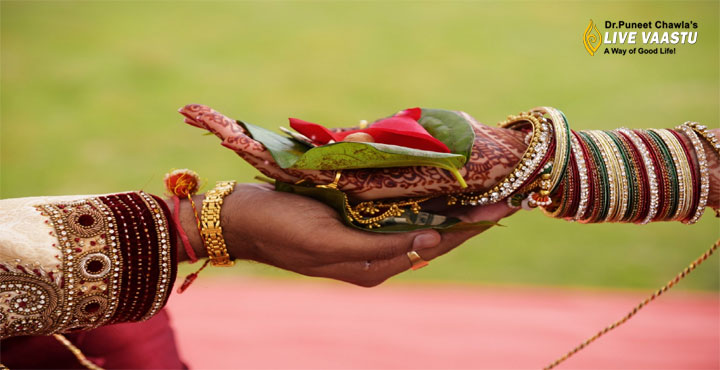
Vivah Sanskar: This sanskar is the source of life. No evolution of the world is possible without this sanskar. It’s leads the society in a proper way. In Hindusim, marriage is a never-ending bond. In Hindus tradition, the objective of marriage is to form the foundation of a family. Braham Vivah is regarded as the best form of vivah. The vivah performed following the vedic rituals is called braham vivah. It’s mentioned in our scriptures that a child born from braham vivah liberates 21 generations from curses.
Anteshti Sanskar: It’s associated with the last rituals of a person when he dies. Anteshti sanskar is called antim sanskar as it’s the last sanskar in the life of a person. The body is cremated chanting mantras. All the relatives, friends and well wishers also assemble at the cremation ground to express their sorrow. Anteshti sanskar is performed for the peace of the departed soul.
.jpeg "Ghar me Negative Energy ke 10 Sanket")


